About 106.2 kms south of Cebu City is the quaint and scenic 5th class municipality of Boljoon. It is two towns away from the southernmost tip of Cebu. It is bounded by the towns of Alcoy on the north, Oslob on the north, and Malabuyoc on the west. East of the town is the Bohol Strait.
What to see in Boljoon?
The way to Boljoon offers a picturesque view of the Bohol Strait from the coastal highway that snakes around the foot of a rocky promontory signifying your entry to the town. This huge slab of geological formation is called Ili Rock and is considered as the town's most important landmark next to the Parish Complex.
Among the more prominent features of the town center include the Boljoon church, rectory, and watchtower that date back to Spanish colonial times.
The church of the Nuestra Señora del Patrocinio is the only extant fortress church in the country that still has an almost intact enclosure and is the oldest remaining original stone church in Cebu. The National Historical Institute declared it as a National Cultural Treasure in 2000.
The Dayhag Falls is one of the many natural attractions in Cebu that has remained relatively undiscovered by everyone other than the residents of the area. It is located in Sitio Ylaya, Upper Beceril in the southern town of Boljoon. Consisting of seven waterfalls roughly of the same sizes and heights, one needs to walk, climb and hike for an hour to complete the tour of the falls.
Showing posts with label National Cultural Treasures. Show all posts
Sunday, December 24, 2017
Tuesday, July 26, 2016
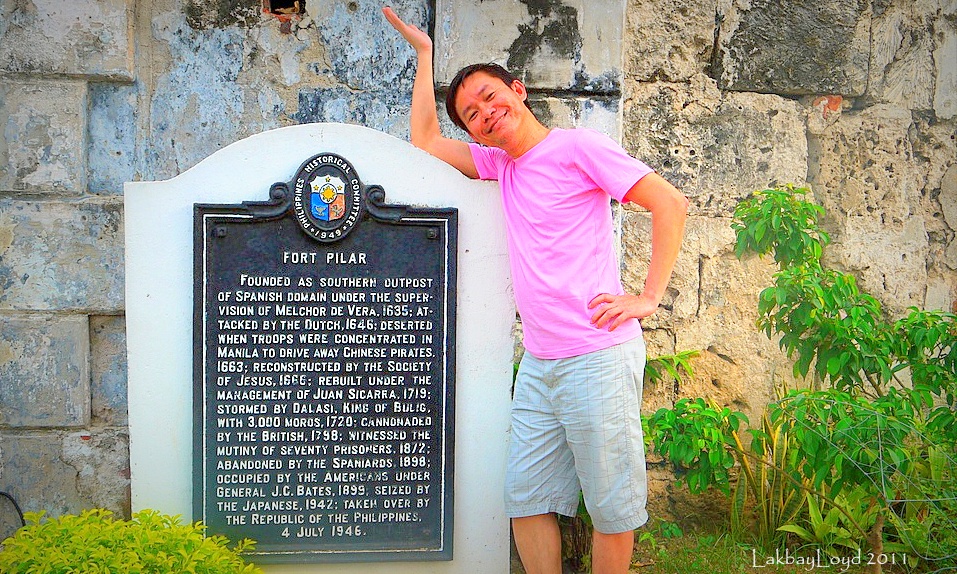
National Cultural Treasure Series - FORT PILAR, Zamboanga City, Zamboanga Del Sur
Fort Pilar is an outdoor Roman Catholic Marian shrine and a museum named after and dedicated to Our Lady of the Pillar, the patroness of the Archdiocese of Zamboanga. It is the major landmark of Zamboanga City as a center of major religious pilgrimage and a symbol of the city's cultural heritage.
Fort Pilar was recognized a National Cultural Treasure on August 1, 1973. A 17th-century military defense fortress built by the Spanish colonial government in Zamboanga City, it was originally named as Real Fuerza de Nuestra Señora del Pilar de Zaragoza or Royal Fort of Our Lady of the Pillar of Zaragoza.
Fort Pilar is a unique structure in any aspects, being an open- air shrine without doors, right in the middle if the City. It is like a permanent invitation for all the Zamboangueños to come at any time of the day or night. There is probably not a single day or night Fort Pilar was found deserted of the locals, pilgrims and tourists.
The Marian Image honored at the Fort is a small replica of the original Nuestra Señora del Pilar in Saragossa, Spain. The Blessed Virgin is believed to have been watching the city and guarding Zamboanga against foreign invasions and natural calamities like quakes and tsunamis.
Fort Pilar was recognized a National Cultural Treasure on August 1, 1973. A 17th-century military defense fortress built by the Spanish colonial government in Zamboanga City, it was originally named as Real Fuerza de Nuestra Señora del Pilar de Zaragoza or Royal Fort of Our Lady of the Pillar of Zaragoza.
Fort Pilar is a unique structure in any aspects, being an open- air shrine without doors, right in the middle if the City. It is like a permanent invitation for all the Zamboangueños to come at any time of the day or night. There is probably not a single day or night Fort Pilar was found deserted of the locals, pilgrims and tourists.
The Marian Image honored at the Fort is a small replica of the original Nuestra Señora del Pilar in Saragossa, Spain. The Blessed Virgin is believed to have been watching the city and guarding Zamboanga against foreign invasions and natural calamities like quakes and tsunamis.
National Cultural Treasure Series - SAN IGNACIO DE LOYOLA PARISH, Capul, Northern Samar
Set in the middle of the San Bernardino Strait in Northern Samar is the island town of Capul - a small piece of enticing island rich in history and culture.
One of the evidences of the island's historic past (aside from the famous Capul Island Lighthouse) is the San Ignacio De Loyola Parish, a 400-year old stone church that has been declared as a National Cultural Treasure by the National Museum of the Philippines in 2014. The church is surrounded by stone walls connoting that it was more than a house of worship, as it was also a fortress and a refuge of the Capuleños during the times of Moro raids. At present it looked like a mini-Intramuros.
Capul was originally named Abak after the name of the chieftain, the deposed King Abak of Java, Indonesia. These migrants landed and settled on the island and brought with them one of the eight rarest dialects in the country - the Inabaknon.
The island is now called Capul from the word Acapulco, a contraction of the name Acapulco in Mexico where the galleon trade with Manila flourished. During the Spanish era, it became a frequent stop-over for galleons that came in and out of the Philippines during the Acapulco Trade. The island was a safe harbor for galleon traders when strong currents prevailed.
One of the evidences of the island's historic past (aside from the famous Capul Island Lighthouse) is the San Ignacio De Loyola Parish, a 400-year old stone church that has been declared as a National Cultural Treasure by the National Museum of the Philippines in 2014. The church is surrounded by stone walls connoting that it was more than a house of worship, as it was also a fortress and a refuge of the Capuleños during the times of Moro raids. At present it looked like a mini-Intramuros.
The island is now called Capul from the word Acapulco, a contraction of the name Acapulco in Mexico where the galleon trade with Manila flourished. During the Spanish era, it became a frequent stop-over for galleons that came in and out of the Philippines during the Acapulco Trade. The island was a safe harbor for galleon traders when strong currents prevailed.
Sunday, June 26, 2016
National Cultural Treasure Series - MINOR BASILICA OF SAINT MICHAEL THE ARCHANGEL, Tayabas, Quezon
The Minor Basilica of St. Michael The Archangel in Tayabas, Quezon is known as the longest Spanish Colonial church with the longest aisle in the entire Philippines measuring 103 meters or 338 feet long. The church is the largest in the province of Quezon and the 2nd biggest in the Philippines, and one of the oldest religious structures. It is built in the shape of a key. Locals often refer to the church as Susi ng Tayabas or the "Key of Tayabas" because of its floor plan designed after the shape of a key. The church has earned the reputation of being one of the most beautiful churches in the country.
The Church of St. Michael The Archangel was declared by the National Historical Institute as a National Historical Landmark in 1978. The National Museum of the Philippines declared Tayabas Basilica as a National Cultural Treasure on July 31, 2001 along with 25 churches in the Philippines.
| The church's 103-meter (338-foot) aisle also has the longest nave among Spanish colonial era churches in the Philippines. |
Monday, June 13, 2016
National Cultural Treasure Series - SAN AGUSTINE OF HIPPO CHURCH, Bacong, Negros Oriental
The Church of St. Agustine of Hippo is located in the coastal town of Bacong, Negros Oriental, the smallest municipality in the province, located south of Dumaguete City. It is the town’s heritage jewel with it's fabled pipe organ. The church’s current structure was completed in 1865. Its sits with its façade and belfry close to and facing the shore as do most churches of the era.
The church was declared by the National Museum as a National Cultural Treasure in 2002.
Its bell tower, the tallest in the province, served as look out for monitoring of maurading pirates. Climbing the top is quite a challenge but the breathtaking view of the Negros seaside and the town plaza surrounded by majestic acacia trees.
Sunday, February 7, 2016
National Cultural Treasure Series - SAN ISIDRO LABRADOR PARISH CHURCH, Lazi, Siquijor - PH-07-0011-NCT
The San Isidro Labrador Parish Church (Iglesia Parroquial de San Isidro Labrador), commonly known as Lazi Church, is located in the municipality of Lazi, Siquijor.
The church is built of sea stones and wood. It belongs to the neoclassical style. It has two pulpits and has retained its original retablo and wood florings. The present stone church was built in 1884 by Filipino artisans followed by the bell tower in the following year. The construction of the convent was made with coral stones and hardwood, commenced in 1887 and completed in 1891. Both the church and the convent were done under the direction of Recollect priest Father Toribio Sánchez.
Lazi Church was declared a National Cultural Treasure by the National Museum of the Philippines in 2012. It was also declared a National Historical Landmark by the National Historical Commission of the Philippines in 1984. It is also nominated to be part of the UNESCO World Heritage Sites of the Philippines under the Baroque Churches of the Philippines (Extension) with the churches of Patrocinio de María in Boljoon, Cebu; La Inmaculada Concepción in Guiuan, Eastern Samar; San Pedro Ápostol in Loboc, Bohol and San Mattias in Tumauini, Isabela.
Source: Wikipedia
The church is built of sea stones and wood. It belongs to the neoclassical style. It has two pulpits and has retained its original retablo and wood florings. The present stone church was built in 1884 by Filipino artisans followed by the bell tower in the following year. The construction of the convent was made with coral stones and hardwood, commenced in 1887 and completed in 1891. Both the church and the convent were done under the direction of Recollect priest Father Toribio Sánchez.
Lazi Church was declared a National Cultural Treasure by the National Museum of the Philippines in 2012. It was also declared a National Historical Landmark by the National Historical Commission of the Philippines in 1984. It is also nominated to be part of the UNESCO World Heritage Sites of the Philippines under the Baroque Churches of the Philippines (Extension) with the churches of Patrocinio de María in Boljoon, Cebu; La Inmaculada Concepción in Guiuan, Eastern Samar; San Pedro Ápostol in Loboc, Bohol and San Mattias in Tumauini, Isabela.
Source: Wikipedia
Subscribe to:
Posts (Atom)