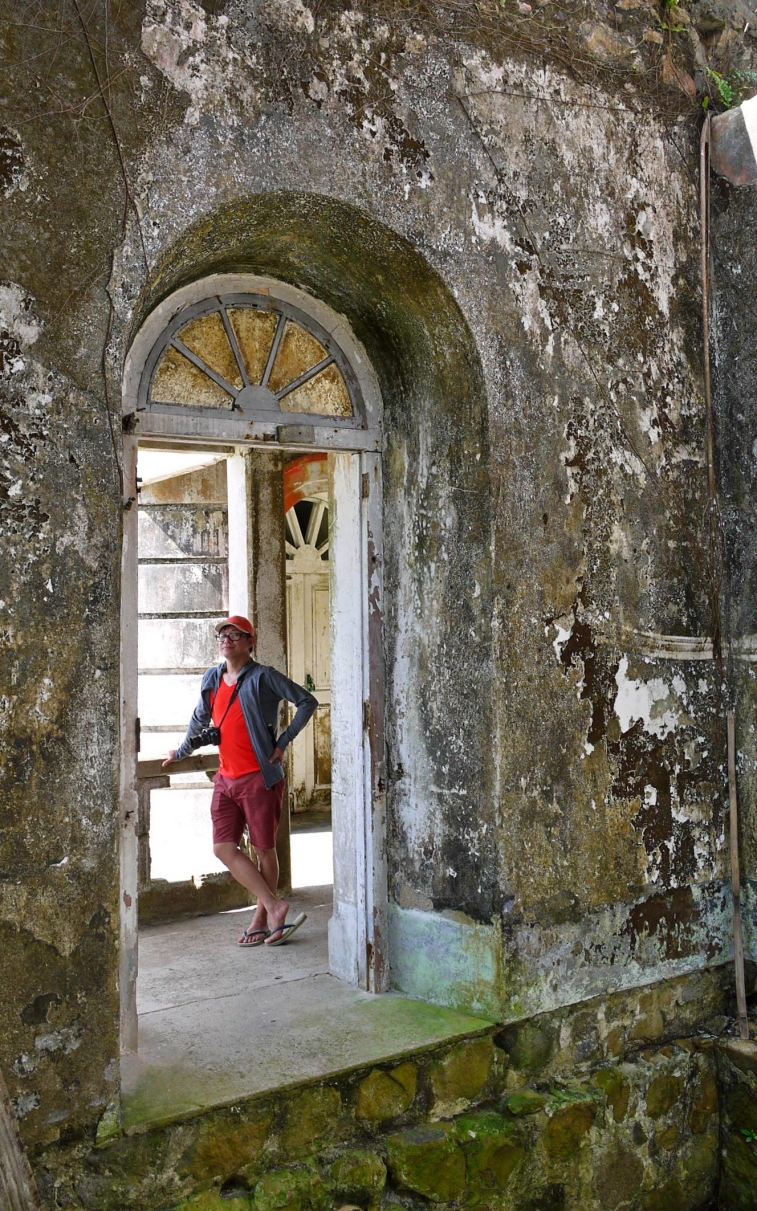
San Bernardino Island Lighthouse was originally my 23rd on my list of century-old Philippine lighthouses to visit only to be followed by
Bagatao,
Bugui and
Gintotolo lighthouses. Due to some unforseen turn of events, I had to postpone this trip three times.
January 08 - There was a gale warning issued by PAGASA due to amihan or northeast monsoon usually being experienced during this time of the year. I was adviced by Sir Dan Intong to cancel my trip and re-schedule it for summer (March onwards).
March 16 - Booked for Catarman, San Bernardino Lighthouse was part of the Northern Samar trip alongside with Batag and Capul. We ran short of time on the third day and needed to postpone San Berdnardino Island visit for the second time.
April 10 - I was ready to visit the San Bernardino Island and everything was set. It was confirmed that there is no amihan during that time. After my Bagatao trip, I headed for Bulusan from Magallanes, Sorsogon to meet Sir Ron Camara for the pre-arranged guided tour. I arrived in Bulusan at 9:00 that morning, checked-in to Bulusan Homestay with the help of Mai of Bulusan Tourism Office, had breakfast, and prepared for the lighthouse trip - then received a text at 10:00 from Sir Ron that the trip has to be cancelled again due to unexpected amihan and the current was unsafe for any type of water vehicles (again!) so I decided to go to Masbate instead.
Finally, after three unsuccessful attempts, the ultimate challenge to come, see and conquer the elusive Faro De Islote De San Bernardino happened on this 13th day of June, 2015!
The San Bernardino Strait is known to be tedious and hazardous. It was specially feared because of its shifting tides and treacherous currents, not to mention the shoals, rocks, and the low-lying islands which menace safe travel. I was so fortunate not to experience any sign of danger, the waters are still and calm during my entire San Bernardino trip.
El Faro De Islote De San Bernardino
Construction of El Faro De Islote De San Bernardino started in 1891 and lit in December 1896. It was designed by Guillermo Brockman, the same architect who designed the Isla De Capul Lighthouse. The building structures remained unfinished by the end of the Spanish era and construction was later continued and became functional during the American occupation in the Philippines.
Considered as one of the most important Spanish lighthouses, it's location was also considered as the most convenient passage in and out of Manila going to and from the Pacific Ocean. The San Bernardino Lighthouse is part of the network of lighthouses found in the region (Capul, Bagatao, Bugui) intended to guide ships during the Spanish Colonial Era to warn and guide vessels entering this dangerous body of water. The famed Manila-Acapulco Galleon Trade route relied on this passage and depended in the help of native navigators who had mastered the treacherous current of the strait. Leaving the ship in the hands of an unskilled navigator would doom a ship's voyage.
The San Bernardino Island is most accessible and nearest from Bulusan. Formerly under the jurisdiction of the Sorsogon Provincial government, the island is now under the jurisdiction of the Northern Samar province. Visitors of Biri Island include visiting the San Bernardino Island hopping in their itinerary.
As of the time of this writing, the San Bernardino Lighthouse is not as totally ruined as most of old lighthouses I already visited, This is the only one with its roof completely intact. The original Fresnel light was replaced with a new one but not functioning - its battery damaged and the solar panels missing (or stolen, perhaps). This structure, with the local government's initiative for an immediate minor repair, can become functional again.
How I got There
This trip was not really intended for Bulusan, Sorsogon but for Puerto Princesa for my planned visit to El Faro De Cabo Melville (Cape Melville Lighthouse) located in the northernmost and remotest island in the Philippines nearest to Sabah, Malaysia - the Balabac Island. I had to cancel my flight to Puerto Princesa due to some politically unfavorable news, as relayed by the local tourism office of Balabac.
Not wanting to stay at home for the next three days, I packed my bag, went to Edsa Pasay and looked for possible means to get to Bulusan. Good thing there's this ELAVIL Bus plying from Pasay to Bulusan leaving the terminal at 7:30 pm everyday. But what was supposed to be a 12-hour trip turned into a 15-hour grueling trip. Lesson learned - I would have taken the buses going to Legazpi (Philtranco, DLTB) for they are more convenient in terms of comfort and speed. Then taking a van, either for Sorsogon City or Gubat, is relatively faster.
Arriving in Bulusan became very convenient and favorable as Sir Ron Camara managed everything for me. He picked me up from the ELAVIL bus station and was very generous to offer his house and prepared some breakfast before going to the San Bernardino Island.
From Bgy. Sabang, Bulusan, we traversed the calm San Bernardino Strait (known to be treacherous at times) going to San Bernardino Island which lasted for 45 minutes by pumpboat. Small and inhabited, the island offers a magnificent view of the Sorsogon Peninsula, the Bulusan Volcano and nearby Capul and Biri Islands. The island also has became a nesting and breeding ground for thousands of common terns.
Sir Ron took me to a familiarization tour of Bulusan after visiting the lighthouse and went to the frequently visited and nearby Nasipit Falls and Embarcadero Watch Tower. The Sabang and Dancalan beach front offers a perfect view of the sunrise and a closer view of the peak of the Bulusan Volcano.
With acknowledgement also to Ms. Debbie Eneria, the Bulusan Municipal Tourism Officer and her staff, MaiMai, for the delightfully refreshing halo-halo treat after that drenching island trip, and for arranging my accommodation in the nearby Villa Luisa Celeste Resort. Before we called off that back-breaking but enlightening day, Sir Ron and friends joined me in a delightful dinner and drinks at Eva's Beach Park across the street from Villa Celeste.
 |
| With Sir Ron Camara and Ms. Debbie Eneria |