


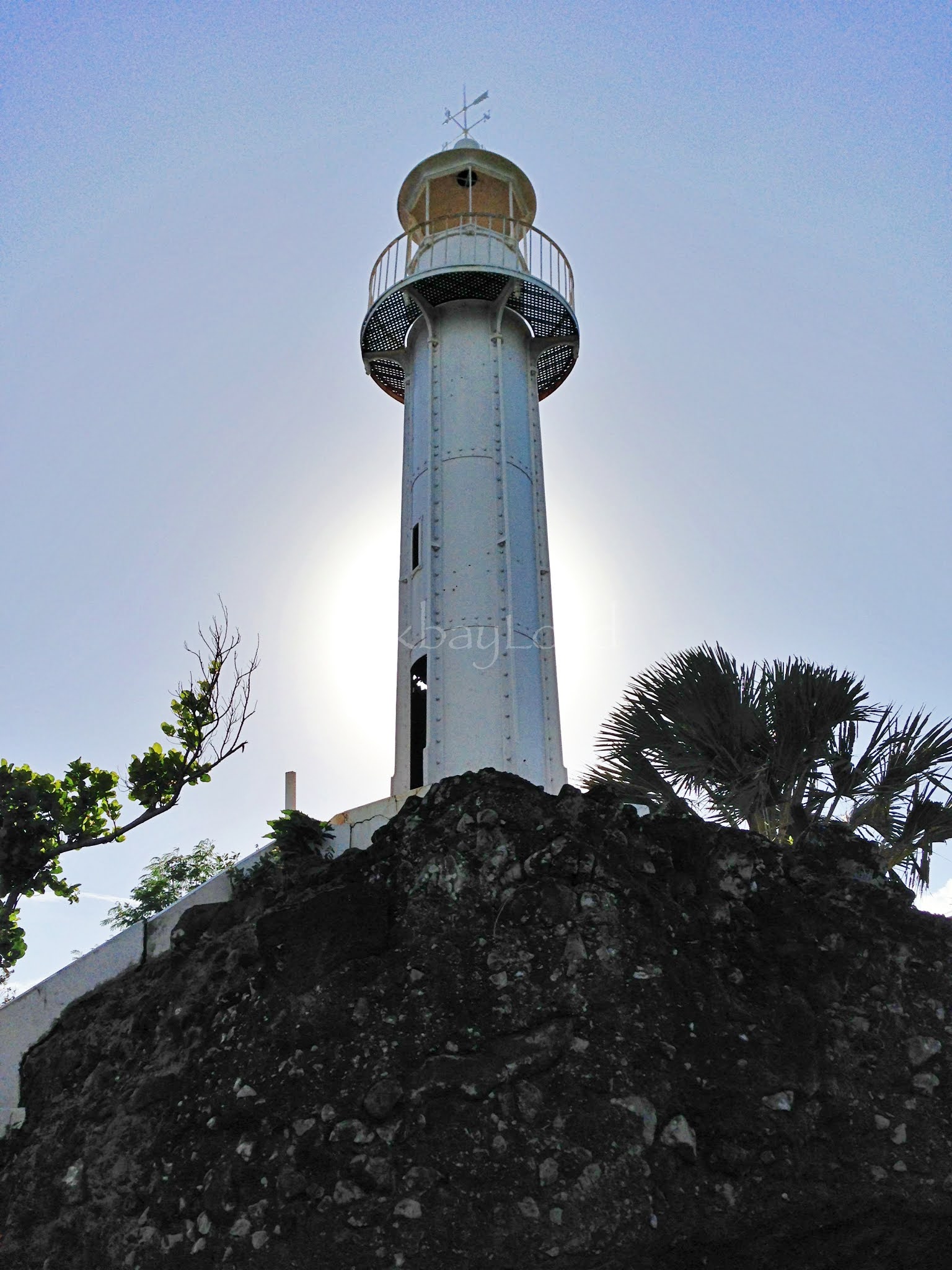
First lit in 1904, the Luz De Isla Bagatao is the last remaining of the tourelle-type towers which is still intact after 111 years. Situated on top of rocky headland in Bagatao Island, Magallanes, Sorsogon, the lighthouse marks the entrance to Sorsogon Bay. It's primary function is to assist ships in navigating the bend around Ticao Island of Masbate as they head to San Bernardino Strait and exit to the Pacific Ocean.
The metal tower used for the lighthouse was bought by Spain and prefabricated in France by the end of the Spanish colonization in the Philippines. The Americans later on took over the project and finished the construction from 1903-1904.
To date, the local government of Magallanes plans to improve the lighthouse's facilities to became a major tourist attraction in Magallanes. A view deck is proposed to be built next to the lighthouse to offer a wonderful view of the Sorsogon Bay.




About Magallanes, Sorsogon
More often than not, each lighthouse I visited not just put a tick-mark on my bucket list but served as catalysts to embark on a journey on off-the-beaten odd locations on its path. Luz De Isla Bagatao led me to this modest hidden paradise town of Magallanes, Sorsogon.






How I got There


That day in Magallanes was indeed a tiring yet productive day, as I was able to go around the town visiting its natural attractions and personally greeted and chatted with The Honorable Mayor of Magallanes, Mayor Augusto Manuel Ragrario, and most importantly, accomplished my first original agenda to Magallanes, that is to visit the Luz De La Isla De Bagataogatao.


Most importantly, I am deeply honored for the warm welcome given by the Mayor of Magallanes, Hon. Augusto Manuel Ragrario. Thank you, Sir and more power.


More often than not, each lighthouse I visited not just put a tick-mark on my bucket list but served as catalysts to embark on a journey on off-the-beaten odd locations on its path. Luz De Isla Bagatao led me to this modest hidden paradise town of Magallanes, Sorsogon.
Magallanes is not your usual tourist spot in this side of Bicol. When you speak of Sorsogon, tourists usually favor Donsol for it's famous whaleshark watching activity. Magallanes, not only promises breathtaking nature and outdoor adventure, but a place where you can be your own tourist.
Arguably, the province's most unique natural attraction is Bagatao Island, with its almost-undisturbed white-sand and emerald-water beauty of the Parola Beach. The name Parola was given to the place simply because it is adjacent from the Bagatao Lighthouse.


Magallanes possesses a rich history not know to many. It is believed to be the site of the first mass celebrated in Luzon in 1569 on the onset of Spanish colonization in the Phillippines. Nonetheless, the Bagatao Lighthouse only proves that Magallanes was once a very important center for commerce during the Galleon Trade era.

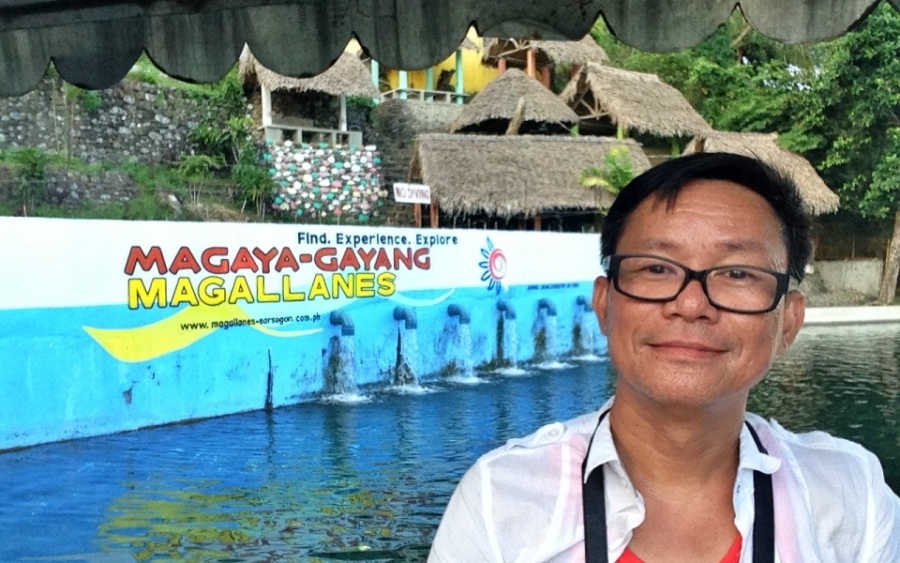
One unique resources that Magallanes can truly be proud of is their source of drinking water. Not bottled, not distilled, but naturally purified spring water. A reservoir catches the water and distributed among households and for FREE. Excess water from the reservoir fill the swimming pools of Bucal-Bucalan Spring Resort, a must-visit.


Magallanes is only accessible by land travel. One has to travel 48 kilometers for Sorsogon City, and has to pass through towns of Gubat, Casiguran, Barcelona, and Juban. The breathtaking view of Mt. Bulusan seems to welcome me as we go up and around that winding road passing by lush green rainforest on one side and the Sorsogon Bay on the other side.


How I got There
The agenda to visit all Bicol lighthouses (Bagatao, San Bernardino, Bugui, and Gintotolo) started on that morning of Thursday, April 9, 2015. I gathered the information about the lighthouses, locations, and proposed itinerary (and budget, of course) from the Regional Tourism Office (Region 5) c/o Mr. Dan Intong.
Among those Sir Dan mentioned as contact person for Magallanes is Sir Joel Carrascal, Magallanes' Tourism Officer. Immediately, I phoned Sir Joel and get an appointment. On my scheduled trip, despite his busy schedule, patiently waited till I arrived at the Legazpi Airport. I knew then that this will be a start of an unforgettable and remarkable trip - and friendship.
The day begun with a hearty breakfast in Legazpi City before heading directly to Magallanes, with stopovers in Juban’s rugged landscape and heritage landmarks.
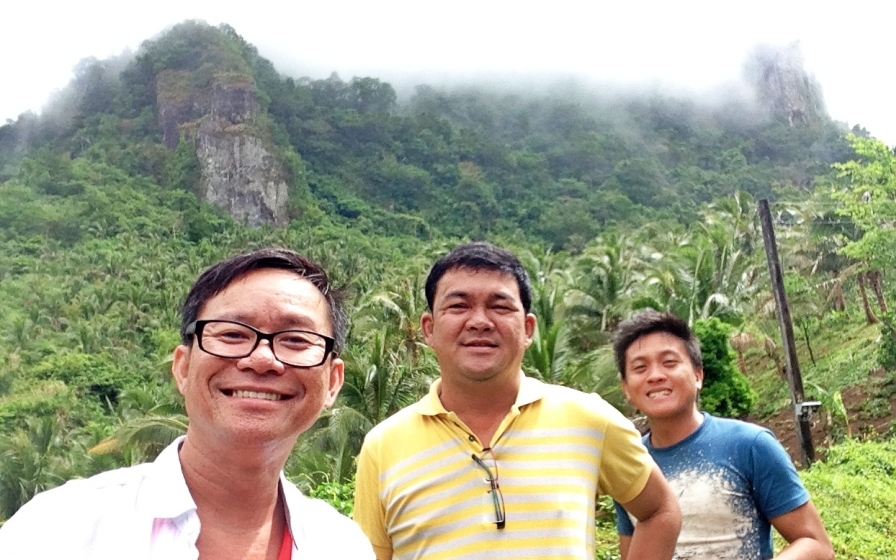


Sir Joel’s was so kind to use his own private vehicle for my transfers - from Legazpi City to Magallanes. He arranged everything from the boat to Bagatao Island, the meals, and his house - full accommodation! What an exceptional display of hospitality to someone you just met! It was a short but noteworthy of knowing Sir Joel's kindness, something extraordinary for someone you just met.


